




Navigating Cross-Border Trade Finance: Oil and Non-Oil Sectors in a Shifting Global Order by Irenosen Ohiwerei, Chief Operating Officer, Coronation Merchant Bank
In Port Harcourt, a mid-sized oil services firm lands a breakthrough: a subcontract on an offshore FPSO project led by a European EPC contractor. The opportunity is stellar. The terms are not. Payment is scheduled for 90 days, but mobilization, labour, and vendor costs are immediate. The firm turns to the bank for support. The pricing of available facilities makes the deal impossible. The options narrow but clear: walk away from the opportunity or raise capital in terms that dilute ownership. This is not an isolated story. It is a pattern. It reflects the central challenge of trade finance in Nigeria. Transactions exist, but the financing structures required to execute them often do not.
Trade finance is a mechanism for improving capital flow across value chains. Yet, across both oil and non-oil sectors, its application is constrained by structural inefficiencies at a time when global shifts demand greater sophistication.
The Oil Sector: From Dominance to Recalibration
Nigeria’s oil sector has long anchored its position in global trade, but the foundations of that dominance have shifted. Two decades ago, production levels exceeding 2.5 million barrels per day supported robust, commodity-backed financing structures. More recently, output volatility, driven by infrastructure gaps, underinvestment, and crude theft, has weakened the reliability on which structures depend. The result is visible in the financing landscape.
Pre-export facilities are now subject to restructuring, longer tenors, and revised pricing. Lenders are increasingly cautious, and transactions are more likely to involve guarantees from multilateral institutions. What emerges is a transition from traditional oil-backed lending to more risk-adjusted, tightly structured frameworks. With the rise of domestic refining capacity, financing demand is gradually shifting downstream.
Instead of crude export facilities alone, there is a growing need for working capital solutions, receivables discounting, and inventory-backed lending tied to refined products and regional distribution. In parallel, natural gas is gaining strategic importance. Participation in LNG exports and pipeline infrastructure requires long-term financing and support from export credit agencies, anchored by offtake agreements. Institutions that can structure these transactions will play a defining role in positioning Nigeria within evolving global energy markets.
Growth Constraints in The Non-Oil Sector
Beyond oil, Nigeria’s export story is expanding slowly and steadily. Agricultural commodities and solid minerals are gaining stronger demand in international markets, and corporate entities are getting involved. However, financing is still a blocker. Within the agricultural value chain, aggregators and processors are crucial links between smallholder producers and global markets. Yet, they struggle to access affordable pre-shipment finance.
Collateral requirements and perceived risks push them toward intermediary structures that erode their margins, making it hard to scale. Structured value chain finance offers a different path. Lending to anchor firms that support upstream suppliers allows financial institutions to align credit with cash flow rather than static collateral.This approach reduces risk and expands access to finance within the value chain.
In the solid minerals sector, Nigerian firms are entering into offtake agreements with international buyers. This creates a foundation for structured trade finance. Yet, execution is complex.Pricing volatility, regulatory considerations, and logistics challenges require specialized expertise across commodities, legal frameworks, and cross-border operations. Institutions that invest in these capabilities can unlock growth in a sector with global demand for critical minerals.
A Global System Under Strain
Trade finance does not operate in isolation. It reflects the realities of a global system that has become more fragmented and less predictable. Geopolitical tensions have disrupted established trade routes, affecting both energy markets and supply chains. For Nigerian corporations, this creates a dual effect. Higher oil prices can strengthen export revenues and collateral positions but rising input costs and logistics disruptions pressure non-oil exporters and import-dependent businesses.
For time-sensitive transactions, the impact is immediate. Delays in shipping can trigger contract renegotiations, increase financing costs, and complicate instruments such as letters of credit, which depend on strict timelines and accurate documentation. These pressures highlight the need for flexibility. Trade finance structures must now incorporate alternative routing, extended tenors, and integrated insurance solutions, while corporations must embed risk management into their operating models.
Nigeria’s FX Constraint and Correspondent Banking Shift
Foreign exchange remains a defining factor in trade finance effectiveness in Nigeria. Recent reforms have improved transparency, but volatility continues to shape pricing, contract negotiations, and repayment capacity. For banks, access to foreign currency liquidity directly affects their ability to issue and confirm letters of credit. For corporates, exchange rate movements influence margins and cash flow stability.
At the same time, a gradual reduction in correspondent banking relationships has added another layer of complexity. Global banks, responding to regulatory pressures and risk considerations, have scaled back exposure to certain emerging markets. In response, Nigerian institutions are diversifying by fostering relationships with banks in the Middle East and Asia, reflecting a broader shift in global trade patterns. While this creates new channels, it also requires adaptation to different systems, processes, and expectations.
The Efficiency Gap: Documentation and Digitization
Even where financing is available, execution challenges persist. Documentation discrepancies, such as errors in invoices, shipping records, and certificates, remain a major source of delays and additional costs. The solution lies in standardization and digitization. Electronic documentation and digital trade platforms reduce human error, accelerate processing, and improve transparency. For Nigerian corporations, adopting these systems is crucial and central to competitiveness in a global market that values speed and accuracy.
Regional Opportunity for Intra-African Trade and AfCFTA
Intra-African trade, particularly in West Africa, presents significant opportunities for Nigerian businesses to expand market reach and optimize supply chains. However, inefficiencies in border processes and transport infrastructure continue to limit volume and increase costs. The African Continental Free Trade Area (AfCFTA) provides a framework to address these challenges. However, policy alone is not enough. Participation requires financing, working capital to scale production, and instruments to mitigate payment risk across borders.
Trade finance is central to AfCFTA’s success. Banks must build capabilities in intra-African transactions, including local currency solutions and supply chain financing tailored to regional dynamics. At the same time, the formalization of informal trade is a largely untapped opportunity. Through smaller transactions in the formal financial system, institutions can expand access, increase volume, and deepen market penetration.
The New Role of Nigerian Banks
The future belongs to banks that combine trade finance, advisory, FX, capital markets, transaction banking and technology into a single client solution. Trade finance is becoming multidisciplinary. The institutions that will dominate the next decade will not necessarily be those with the largest balance sheets, but those with the deepest structuring expertise, strongest international relationships, and ability to combine advisory, capital markets and trade finance into integrated solutions. This is particularly relevant for merchant banks, whose comparative advantage lies not simply in providing credit, but in structuring complex transactions that bring together multiple sources of capital, risk management tools, advisory expertise, and cross-border relationships.
ESG and the Future of Trade Finance
The evolution of trade finance is also being shaped by sustainability. Many Development Finance Institutions (DFI) now provide green trade finance, climate-linked facilities, and transition finance designed to support businesses and sectors moving towards more sustainable operating models. For Nigeria, this presents an opportunity across emerging value chains. The country’s gas sector, renewable energy projects, and businesses supporting the energy transition could benefit from financing structures that connect capital to measurable sustainability outcomes. As global investors and financial institutions continue to factor environmental considerations into capital allocation, sustainability-linked trade finance could become an important component of Nigeria’s broader trade finance ecosystem.
The Future of Cross-Border Trade
Nigeria does not lack transactions or ambition. What is required is alignment between financial systems, trade dynamics, and global realities. Trade finance in Nigeria is in a period of transformation. This transformation is shaped by diversification that transcends oil, digitization of processes, and regional integration. The oil sector will remain critical, but its financing structures will continue to evolve. Non-oil exports will evolve, provided financing models adapt to their realities. Digital platforms will reduce inefficiencies, while regional frameworks like AfCFTA will open new markets.
The priority for financial institutions is the development of specialised structuring capabilities, investment in technology, and partnerships across borders. For corporations, access to tailored, flexible financing to enable them to participate in global trade and shape its next phase is pertinent. Trade finance can move beyond enabling transactions to unlocking value across entire ecosystems. When capital flows efficiently, businesses execute contracts successfully and scale.
This offers one of the clearest pathways to positioning Nigeria within an opportunity-rich global trading order. In the coming decade, countries will compete not merely on what they produce, but on how efficiently they finance trade. Nations that build sophisticated trade finance ecosystems will capture greater value from global commerce. Nigeria possesses the entrepreneurial capacity and market scale to lead this transformation. The question is no longer whether opportunities exist, but whether our financial institutions can structure capital quickly enough to seize them.
Speak with the Coronation Merchant Bank Trade Finance team on 0201-2797640 or 0201-2797641 or email marketingcomms@coronationmb.com to explore tailored trade finance solutions for your business. Visit www.coronationmb.com to learn more.
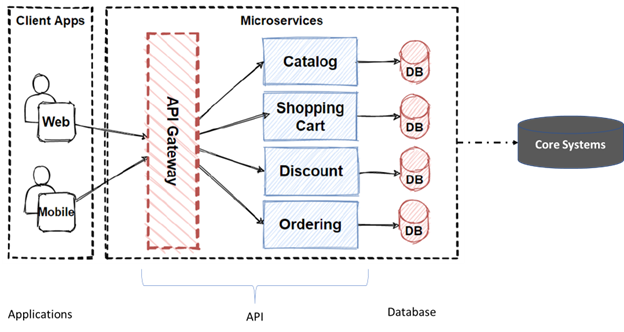
Explanation: An app or corporate system sends a request to the API gateway, which authenticates and routes it. The orchestration layer processes it using endpoints, pulling data from the core system via middleware.
The orchestration layer (behind the gateway) breaks services—like catalog, shopping cart, or ordering—into modular endpoints, like building blocks online shops can share securely. The modular endpoints connect these APIs to core systems, translating the requests into formats that can be processed by the core system. Companies also provide developer portals with clear documentation and sandbox environments, simplifying integration for partners.
This architecture can be built for scale. Banks process millions of transactions daily using load balancing to scale out resources, and distribute traffic in a dynamic fashion. This architecture could incorporate the use of in-memory databases and Queueing technologies to cache frequently used data for swifter processing. More so, this introduces rate limiting features which help isolate any problem areas without affecting the entire service as a whole.
Challenges abound. One of such is the existence of legacy systems as many banks and organizations often rely on decades-old mainframes (core systems), thus requiring a middleware solution to bridge old and new systems—a complex but critical step. Another recent challenge is the need to enforce data privacy expectations, this has made encryption and data masking a necessary action. Encryption in itself comes with its own attendant side-effects especially where applied on data without proper service governance. It can slow performance, so banks and organizations use caching and optimized data flows to balance speed and security. Compliance with CBN guidelines and Nigeria’s data privacy laws demands robust consent management and audit trails. Versioning APIs (e.g., /v1/payments) prevents disruptions when systems evolve.
Real-world examples highlight APIs’ impact. Coronation Merchant Bank built the Dangote ISOP Collection API to streamline payments for Dangote’s distributors. These payments were previously riddled with slow reconciliations and delayed cash flow. The API integrates payments directly into Dangote’s ERP system and thereby automating the process, reducing errors, and strengthening business ties. Another bank used a KYC API to verify customer identities for loan applications, cutting onboarding time while meeting CBN standards. A third example involves a major Nigerian bank’s payment API, which enables instant corporate transfers for retailers, ensuring funds clear in seconds during peak sales.
APIs are also driving open finance. The CBN’s 2023 guidelines expand APIs to cover credit, investment, and insurance data, enabling embedded finance—loans at retail checkouts or savings tools linked to salary accounts. This makes banking invisible yet ever-present, blending into daily life.
The future is exciting. Banks are adopting API-first design, prioritizing APIs as core interfaces for faster innovation. AI-driven APIs are emerging, enabling fraud detection or tailored loan offers. Blockchain-based APIs promise secure cross-border payments. Event-driven architectures, using tools like Kafka, process real-time events like transaction alerts, boosting efficiency.
At Coronation Merchant Bank, our APIs are business enablers. Our custom solutions, like the Dangote integration, solve real-world problems, while our investment banking desk advises on capital raising and partnerships, helping clients stay competitive. APIs lower barriers, drive growth, and deliver seamless experiences for customers.
Nigeria’s financial future isn’t about who holds the most assets—it’s about who builds the strongest connections between data, money, and people. API architecture is the invisible engine powering that future, creating a connected, inclusive banking ecosystem.